
Founders preparing a first launch
You can record the working product but have no supporting footage. Add context before the demo using a scene based on the problem you solve.
A solo launch often starts with a screen recording, a few screenshots, and one announcement to write. VidMage helps you make the opening clip, guide artwork, or email image missing from that small asset library.
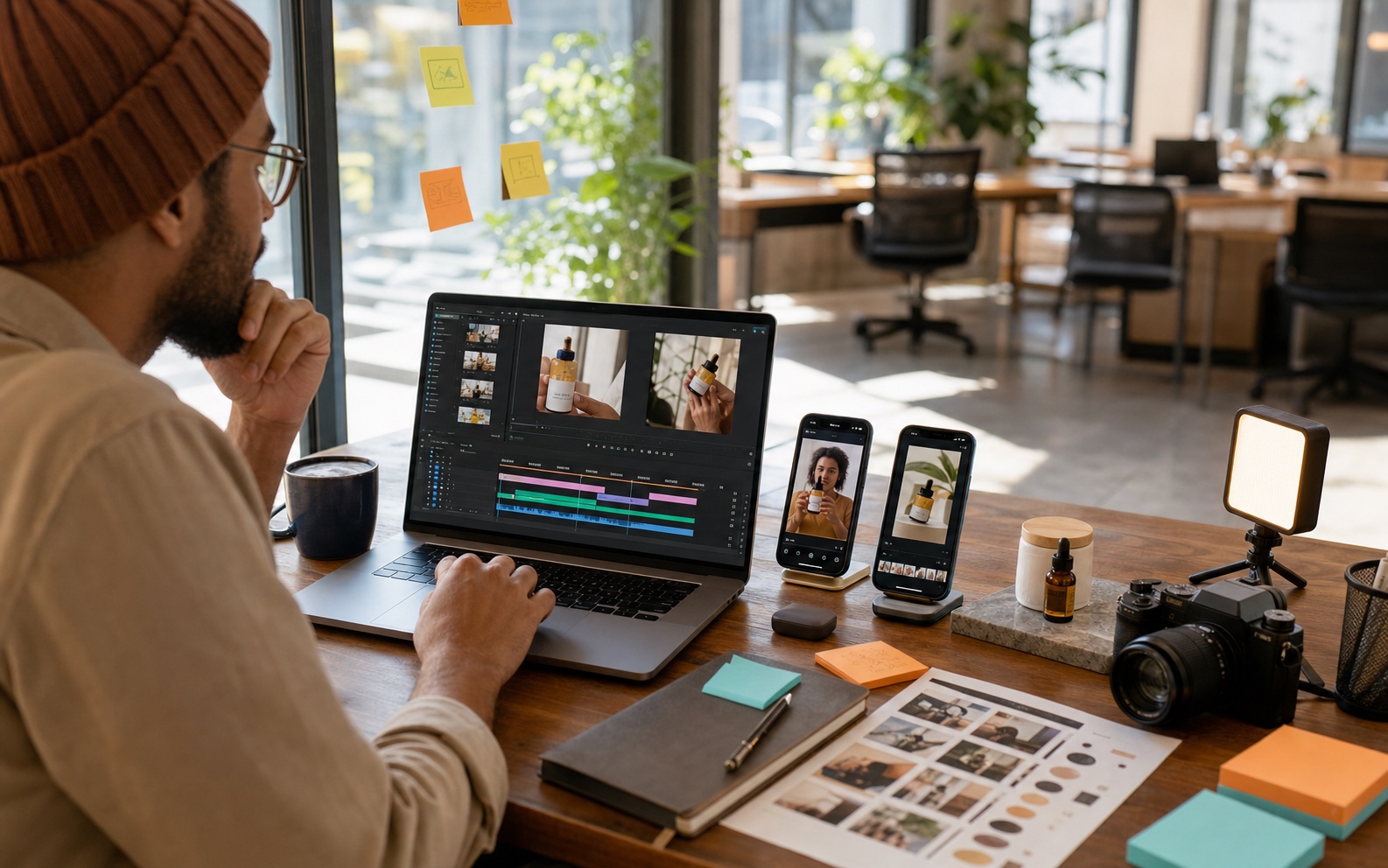
Work from a small set of real materials: a demo, a release note, a recorded update, or an email draft.
You can record the working product but have no supporting footage. Add context before the demo using a scene based on the problem you solve.
Your progress update is recorded at the same desk each week. Prepare a supporting visual for the decision or lesson you are discussing.
You need one useful image beside the launch explanation. Describe the audience’s situation and add your headline in the email design.
A bug fix or workflow improvement needs a clear explanation. Show the changed control in a real screenshot, then connect it to the task in your release note.
Your guide has lesson notes and real screenshots. Create cover or chapter artwork that shows the lesson’s subject while the screenshots teach the steps.
Divide a compact asset list between recording and design, then assemble the announcement in the publishing tools you already use.
VidMage can supply a missing visual while you keep the product recording, release facts, and publishing decisions in your own tools.

Scattered paper notes introduce a founder’s real walkthrough of a simple project planner.
Founders preparing a first launch
Your first launch video is a screen recording that starts inside the product. People who have not followed the build need a reason to care before you show the controls, and you do not have footage of the customer’s situation.
Describe that situation in VidMage’s Text to Video, such as a desk covered with disconnected project notes. Use the selected scene as a brief opening, then switch to your real demo and explain the task your product handles.
Give first-time viewers the context needed to follow the demo, using one supporting shot alongside the product recording you can capture yourself.

A recording-workspace illustration opens the filming chapter of a founder’s product-demo guide.
Independent course and guide makers
Your paid guide teaches founders to record their first product demo. The draft has lesson notes and real editing screenshots, but the filming chapter opens with another software screen instead of showing the recording setup readers will build.
Describe a compact desk, camera, and light in VidMage’s AI Image Generator. Use the selected workspace illustration on the filming chapter’s opening page. Follow it with your own setup photos and editing screenshots so readers can work through the actual lesson.
Make the filming chapter easy to recognize when readers scan the guide, while your setup photos and screenshots explain the equipment and steps.

A warm reading room image introduces a paid guide to designing a small reading corner.
Newsletter publishers
The email draft explains who the product is for and what is available, but its only image is a dense screenshot. At newsletter size, the interface is difficult to read and gives the subject little personality.
In VidMage’s AI Image Generator, describe a single scene connected to the reader’s problem. Leave room for a heading if your layout needs it. Add the final title and screenshot in your design tool, then place the image in your email draft.
Create a recognizable entry point for the announcement, with readable product details kept in the email copy and actual screenshots rather than generated lettering.
A founder briefly shows an animated launch illustration while describing the design choice behind the next release.
Build-in-public creators
Your weekly founder update covers a difficult design decision in one long talking-head recording. You already have an illustration from the launch, but no extra footage to show while explaining that part of the story.
Bring the owned illustration into VidMage’s Image to Video and describe a small camera move. Place the downloaded clip under the relevant part of your recorded narration, then return to your own footage for the conclusion.
Reuse the launch’s artwork as a supporting moment in the update, keeping your personal explanation central while varying what viewers see.
Choose the smallest set of visuals that supports the release you are actually publishing.
Collect a working demo, current screenshots, chapter notes, and any owned artwork. Choose a demo opening, guide chapter image, email visual, or update cutaway.
Name the reader’s problem and where the asset will appear. Generate a scene or illustration in VidMage, or animate artwork you already own.
Check that the image or scene supports what is available now. Download the selection and keep feature wording and interface details in your own materials.
Place compatible files in your editor, page builder, or email design. Add the exact release stage, destination, and next step, then review the complete announcement.
A guide chapter and a demo need different visuals. Start with the destination and the material you already have.
| Release job | Your input | VidMage tool | Output |
|---|---|---|---|
| Context before a first demo | Customer situation + scene brief | Text to Video | Opening before your screen recording |
| Opening artwork for a practical guide chapter | Lesson topic + recording setup brief | AI Image Generator | Chapter image beside your real lesson materials |
| Artwork for a launch email | Reader problem + email layout needs | AI Image Generator | Image for an announcement email |
| Cutaway in a founder update | Owned launch illustration + motion direction | Image to Video | Clip beneath your recorded narration |
| Another cover direction for a guide | Owned cover artwork + style prompt | Image to Image | Artwork option for your cover layout |
Download the VidMage asset and place it in an editor or design tool that accepts the file. Put real screenshots, current release wording, and the destination beside it. Review the full message at the size your audience will see.
Your page builder, email service, and account tools handle distribution; this workflow adds visual files to that process.
Capture the actual build so the announcement shows what is available.
State what changed, who it helps, and the action a reader can take now.
Check the image in the actual email, page, or video layout before sending the announcement.
Concept artwork can explain an idea. Real product material should establish what customers can use today.
Start with the missing material in the announcement you are ready to publish. A demo may need an opening scene; a release email may need one illustration. Create that asset before planning a larger set of campaign visuals.
Choose a chapter whose subject benefits from a scene image, such as a desk setup for recording a demo. Create the opening artwork with AI Image Generator. Use your own setup photos and software screenshots for the instructions that follow.
Use a scene or illustration to explain the problem and your intended direction. State the prototype status in your own copy. Show real recordings only for behavior the current prototype can demonstrate.
Describe a single scene with a clear subject and space that suits your layout. Download the image, add any exact heading in your design tool, and check its legibility inside the email draft.
You can animate an owned illustration with Image to Video, then use the downloaded clip under your recorded explanation. Keep the update’s current details in your narration and captions rather than relying on text inside the animation.
Decide which specific assets you need before generating. The tool displays the cost for its model and settings. Review that amount for each image or clip, especially if you want several visual directions.
View pricingVidMage does not use uploads, prompts, or generated images and videos for AI model training. Uploaded and processed Web photos and videos are deleted within two hours. Save your originals and selected downloads in your own launch folder.
Read the privacy policyChoose one launch illustration to animate or one customer situation to show before the demo. Finish that announcement first.